Entertainment is one of the oldest and most universal aspects of human life. It transcends cultures, languages, and generations. From the rhythmic drumbeats of ancient tribes to the high-definition spectacles of today’s digital screens, entertainment has always been a vital force driving human creativity, emotion, and connection. It keeps us inspired, comforted, and sometimes even challenged. To understand entertainment is to understand the evolving human story itself — a journey from campfire tales to cinematic universes and from live plays to immersive virtual realities.
The Origins of Entertainment
Thousands of years before modern media, entertainment existed in its most natural form — storytelling. Humans gathered around fires to listen to tales of gods, heroes, and moral lessons. Ancient societies used songs, dances, and performances to celebrate victories, honor deities, and educate their people. In Egypt, music was integral to ceremonies. In Greece, dramatic performances in open-air theatres shaped cultural discourse. The Romans built massive amphitheaters for gladiatorial contests, balancing brutality with grandeur.
Even in pre-literate societies, humans created forms of entertainment using rhythm, gesture, and art. Cave paintings can be viewed as the earliest visual storytelling — an effort to depict experiences and spark emotion. Entertainment, from its inception, wasn’t just about amusement; it was about communication, catharsis, and shared experience.
Entertainment in the Classical Era
The classical civilizations of Greece and Rome formalized entertainment as both art and public engagement. Greek tragedies and comedies by playwrights like Sophocles, Euripides, and Aristophanes explored themes of morality, fate, and humor. Theaters became social centers, blending philosophy, performance, and politics.
Romans added grandeur to the mix. They constructed colossal venues such as the Colosseum, staging chariot races and gladiatorial battles. Despite their often violent nature, these spectacles reflected human fascination with drama, courage, and spectacle.
During this period, music, dance, and poetry flourished as key forms of entertainment. The lyre and flute provided melodic accompaniment to recitals and ceremonies. In essence, entertainment became a mirror of societal values — showing what people admired, feared, or celebrated.
The Medieval Era: Faith and Festivity
With the rise of medieval Europe, entertainment adapted to a world dominated by religion and feudalism. Church rituals incorporated music and drama, leading to the birth of mystery plays that depicted biblical stories. Outside church walls, traveling minstrels and jesters entertained nobles with songs, satire, and tales.
Fairs and festivals became the pulse of popular entertainment. These public gatherings mixed commerce with performance — jugglers, puppeteers, and dancers filled the squares with laughter and color. Though limited by class divisions, entertainment remained a universal escape from the harsh realities of daily life.
In Asia, meanwhile, art forms like Chinese opera, Japanese Noh theatre, and Indian classical dance reached extraordinary sophistication. Entertainment became deeply tied to spirituality, storytelling, and cultural identity.
The Renaissance: Art Reborn
The Renaissance revolutionized entertainment. With the rediscovery of classical knowledge, creativity blossomed across Europe. Artists like Leonardo da Vinci and Michelangelo turned visual art into a form of entertainment and enlightenment. Theater thrived once again — most famously through William Shakespeare, whose plays balanced tragedy, comedy, and human insight.
This period also marked the emergence of printed books and musical innovation. Composers like Bach and Vivaldi shaped what we now call classical music, offering entertainment that was both emotional and intellectual. The Renaissance spirit elevated entertainment from mere amusement to an expression of intellect and imagination.
The Industrial Revolution: Mass Entertainment Begins
The 18th and 19th centuries transformed entertainment forever. The Industrial Revolution brought urbanization and new technologies that enabled mass production of books, newspapers, and later, recorded music. For the first time, entertainment became a commodity accessible to the general public.
The invention of photography and motion pictures created entirely new industries. People could now witness distant events, performances, and stories without leaving their cities. Theaters, circuses, and vaudeville shows flourished as working-class leisure activities. Music halls became vibrant spaces of escape and joy.
The phonograph and later the radio revolutionized how people consumed entertainment — turning songs and voices into intimate companions at home. Entertainment became democratized, and mass media was born.
The Golden Age of Cinema
The 20th century ushered in perhaps the most powerful entertainment medium of all: film. From the silent films of Charlie Chaplin to the golden age of Hollywood, cinema became the dominant global art form. Movies offered an escape, a dream world where ordinary people could experience adventure, romance, and fantasy.
The 1930s to 1950s marked a period of cinematic brilliance. Studios produced timeless classics that shaped cultural memory for generations. Stars became icons, and the concept of celebrity was firmly established. The storytelling power of cinema was unparalleled, allowing entire societies to explore collective hopes and fears through visual narratives.
As color, sound, and special effects evolved, so did the emotional depth and spectacle of films. From the poetic elegance of Casablanca to the grandeur of Gone with the Wind, cinema became more than entertainment — it became art.
The Birth of Television: Bringing Entertainment Home
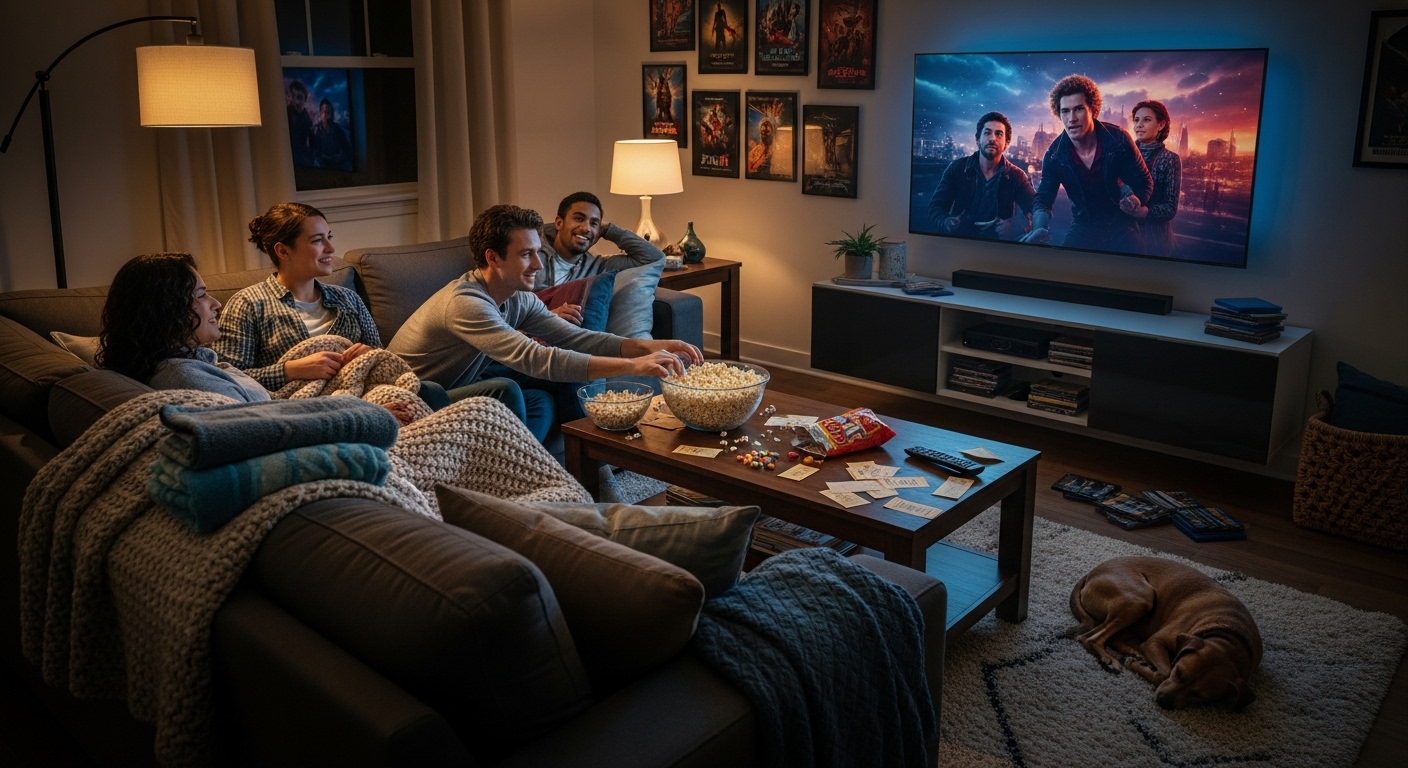
Television changed everything once again. In the mid-20th century, families began gathering around their TVs for news, sports, and drama. Entertainment moved from public spaces into private homes. Sitcoms, variety shows, and soap operas became daily companions. The medium connected people to the wider world in real time.
Television also shaped collective memory through landmark broadcasts — from moon landings to concerts and sporting triumphs. It democratized fame, allowing performers, journalists, and even ordinary people to reach millions.
By the late 20th century, cable networks diversified entertainment further, targeting niche audiences and genres. TV became a mirror of modern life — reflecting diversity, innovation, and the shifting pulse of society.
The Rise of Music and Pop Culture
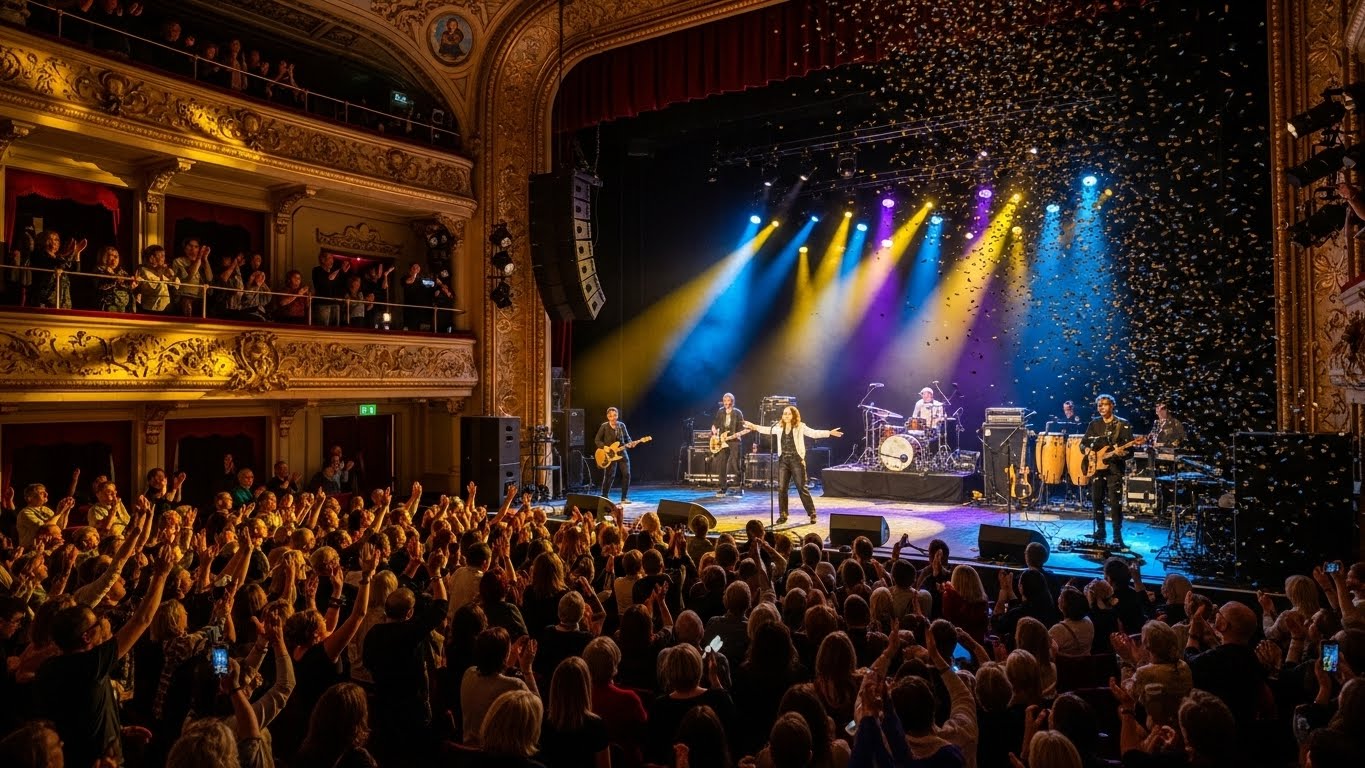
Music has always been central to entertainment, but the 20th century turned it into a global industry. The invention of records, cassettes, and CDs made music portable. Radio DJs and MTV turned musicians into global icons. Rock and roll, jazz, hip-hop, and pop reshaped social identity and rebellion.
The Beatles, Elvis Presley, Michael Jackson, Madonna, and countless others became cultural phenomena. Music videos added a visual layer to sound, merging performance and storytelling. Festivals like Woodstock symbolized music’s power to unite and inspire.
Music not only entertained but also gave voice to movements — from civil rights to anti-war protests. It proved that entertainment could be both emotional release and social revolution.
Sports as Spectacle
While artistic forms of entertainment thrived, sports became a parallel global phenomenon. From soccer to cricket, basketball to boxing, athletic competition turned into theater for millions. Modern sports merged drama, skill, and national pride.
The Olympics, FIFA World Cup, and other global events drew audiences of billions, uniting people across cultures. Sports heroes became icons, embodying values of discipline, courage, and triumph. Stadiums turned into modern coliseums, and television brought every cheer, every heartbreak, into living rooms.
The Digital Revolution: Entertainment Goes Online
The late 20th and early 21st centuries brought another seismic shift — digital technology. The internet turned entertainment from a one-way broadcast into an interactive experience. Websites, blogs, and social media empowered users to create, share, and remix content.
Platforms like YouTube democratized fame, giving rise to influencers and independent creators. Streaming services revolutionized how audiences consume entertainment, allowing them to watch anything, anywhere, anytime. The concept of “binge-watching” entered our vocabulary, reflecting the new rhythm of digital leisure.
Video games became a dominant form of entertainment, blending storytelling, music, art, and interactivity. Esports now rival traditional sports in popularity, with players becoming celebrities in their own right.
The Psychology of Entertainment
Why do humans crave entertainment? Psychologically, it fulfills multiple needs — relaxation, social connection, emotional exploration, and even identity formation. Entertainment lets people escape from stress while also helping them process emotions and ideas indirectly.
Comedies help release tension through laughter. Tragedies allow empathy and catharsis. Action and adventure fulfill our instinct for excitement. Music taps into deep emotional memory, influencing mood and motivation. In short, entertainment reflects our inner world, helping us understand ourselves and others.
The Business of Entertainment
Behind every artistic creation lies a complex industry. Entertainment today is one of the world’s largest economic sectors, encompassing film, television, music, gaming, publishing, and live events. Major companies invest billions to capture audience attention, and competition is fierce.
Branding, marketing, and data analytics now shape entertainment decisions as much as creativity does. The success of a movie or show depends on algorithms, social trends, and audience engagement. While some criticize this commercialization, it has also enabled unprecedented global access to art and storytelling.
Independent creators use crowdfunding and social media to bypass traditional gatekeepers, leading to a more diverse and inclusive entertainment landscape. The audience is no longer passive — they are participants, critics, and collaborators.
Globalization and Cultural Exchange
The internet has made entertainment global. A Korean pop band can dominate charts in Latin America; a Spanish show can become a worldwide sensation; an African dance trend can inspire millions across continents. Cultural boundaries are blurring, leading to creative fusion and mutual inspiration.
However, globalization also raises questions about cultural identity and authenticity. As entertainment becomes homogenized through global platforms, unique local traditions risk being overshadowed. Still, many creators are finding ways to blend heritage with innovation — preserving identity while embracing modernity.
The Age of Streaming and Personalization
Streaming has redefined modern entertainment consumption. Services now compete not just for viewers but for attention spans. Algorithms recommend content tailored to individual tastes, turning entertainment into a personalized experience.
While this convenience empowers users, it also creates “echo chambers” where people are exposed only to familiar content. Yet, the sheer volume and accessibility of entertainment today are unprecedented. Entire libraries of film, music, and games are available at a touch, giving rise to both opportunity and overload.
Social Media and the New Celebrity Culture
In the digital age, entertainment and social media are inseparable. Platforms like TikTok, Instagram, and X (formerly Twitter) have created new forms of fame. Ordinary individuals can reach global audiences overnight, redefining what it means to be an entertainer.
This has also blurred the line between personal life and performance. Audiences crave authenticity, but constant exposure comes with pressures of visibility and validation. The new generation of creators navigate fame in real time, transforming entertainment into a living, breathing ecosystem.
Virtual Reality and the Future of Immersion
Technology continues to push boundaries. Virtual reality (VR) and augmented reality (AR) promise entertainment that’s not just seen but experienced. Audiences can now step into virtual concerts, interactive stories, or simulated worlds. The line between reality and imagination grows thinner every day.
Artificial intelligence is shaping music composition, film editing, and even storytelling. Interactive entertainment allows viewers to choose endings or influence narratives. The future promises not just consumption but co-creation — entertainment as a shared, evolving journey.
The Social Impact of Entertainment
Entertainment doesn’t just reflect culture — it shapes it. Movies influence fashion and behavior. Music inspires revolutions. Television can change opinions and raise awareness about social issues. Through entertainment, societies debate values, justice, and identity.
However, this power also brings responsibility. Media can reinforce stereotypes or challenge them. It can unite people or divide them. As entertainment grows more pervasive, creators and audiences alike must consider its ethical and cultural implications.
The Therapeutic Role of Entertainment
In modern life, entertainment often serves as therapy. Laughter reduces stress, music heals emotional wounds, and immersive stories provide comfort. During crises — from wars to pandemics — entertainment sustains morale and offers collective hope.
Psychologists recognize the role of entertainment in emotional regulation. Watching a favorite film, reading a novel, or listening to a cherished song can be a deeply restorative act. It allows people to feel, remember, and recover.
Challenges in the Modern Entertainment Landscape
Despite its power, entertainment faces challenges. The saturation of digital content has made attention a scarce commodity. Misinformation, piracy, and content overload threaten both creators and audiences. Moreover, algorithms can distort visibility, prioritizing popularity over quality.
Mental health issues among entertainers highlight the pressure of constant public scrutiny. The quest for virality sometimes undermines authenticity. Balancing creativity, ethics, and technology is now one of the industry’s biggest tasks.
The Eternal Flame of Creativity
At its heart, entertainment is about storytelling — and storytelling is timeless. Whether through music, drama, dance, or digital art, humans will always seek to express and share. Technology may change formats, but the essence remains: the desire to feel, connect, and imagine.
As we move into an age of AI and virtual reality, entertainment will continue evolving. Yet, its purpose will stay the same — to illuminate the human experience.
Conclusion: Entertainment as the Soul of Humanity
From ancient rituals to streaming platforms, entertainment has defined who we are. It binds communities, inspires art, and gives life meaning beyond survival. It teaches empathy, provides escape, and celebrates the endless spectrum of human emotion.
Entertainment is not just about fun; it is about freedom — the freedom to dream, to laugh, to cry, and to explore the infinite worlds within us. It has been with humanity since the dawn of time and will remain until the last story is told.